
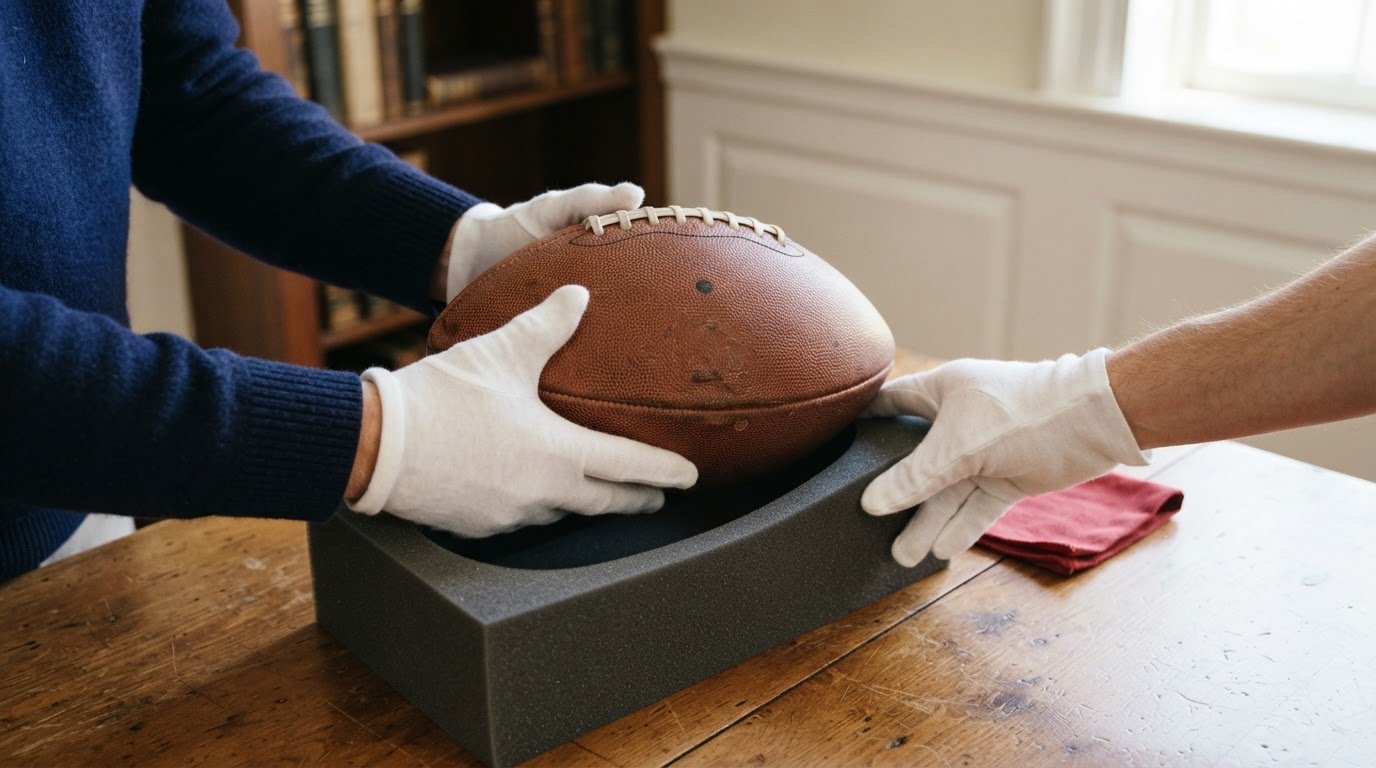
A famous signature doesn’t automatically make a football a strong investment. In New York and Connecticut, an autographed football’s value depends on the player’s significance, the autograph’s authentication, the item’s condition and rarity, and how often the player signs or did sign during their lifetime.
A star player’s signature may attract more interest, but demand alone doesn’t determine value. Clear authentication and a scarce, historically significant item can strengthen its appeal, while frequent signing can make an autograph less valuable.
This article explains how these factors shape value and investment potential, and what to consider when assessing a signed football. It also explains why the same player’s autograph can carry different weight across items, and how documentation and condition affect collector appeal.
Key Takeaways
- Compare a football’s player, condition, historical significance, and edition details to understand what may drive collector interest.
- Hall of Fame recognition can strengthen an autograph’s appeal, but the player’s broader legacy and demand also matter.
- Authentication and records of the signing help support confidence in an item’s provenance and desirability.
- Consider how often a player signs and how scarce the specific football is before judging its investment potential.
1. Is Autographed Football Memorabilia a Good Investment?
An autographed football can attract collectors, but its investment value depends on evidence, not the signature alone.
Start with the player and the moment the football represents. A signature connected to a major game or an important point in football history may attract interest. The player’s fame matters, but collectors also consider how directly the item connects to that legacy. A routine autograph tells a different story from a football associated with a defining game.
Next, examine the football itself. Worn panels, fading ink, or damage near the signature can affect its appeal. Edition details matter, too: a numbered release may be scarcer than a standard signed ball. An inscription can connect the item to a milestone, sometimes enhancing the item’s value.
Authentication and provenance support a signature’s credibility. Keep authentication paperwork and records showing where the football came from. A photograph documenting the signing can also support its provenance. These records help collectors assess the item, but they don’t establish its condition or demand by themselves.
For an in-person review in Connecticut, bring the football and its supporting records to a specialist who evaluates autographs and provenance. A review assesses the item; a purchase offer is a separate transaction. State which service you’re seeking when you present the football.
Assess investment potential by considering the player, event, edition, condition, authentication, and history together. A famous signature on a poorly preserved football may be less compelling than a documented item connected to an important moment. These details help frame fair market value. They also clarify whether the item’s collector appeal aligns with your reasons for keeping or selling it.
2. Player fame and Hall of Fame status
A player’s reputation shapes who wants an autograph, but fame alone doesn’t establish a football’s value. Collectors may consider Hall of Fame recognition alongside career achievements, memorable games, and lasting fan interest. These factors help explain why signatures from celebrated players can attract attention, while the specific item still matters.
Tom Brady illustrates how a long, high-profile career can support collector interest. His career statistics include 7 Super Bowl rings, 89,214 passing yards, and 649 career touchdowns. He retired from professional football in 2023. Those milestones give collectors concrete context for his signature, but they don’t make every Brady-signed football equally desirable. An inscription, the football’s condition, and the item’s connection to a particular moment can distinguish one piece from another.
Emerging players present a different profile. Drake Maye was the third overall pick in the 2024 NFL Draft. That draft position gives collectors a clear career marker, but it doesn’t establish the same historical record as a long-playing star. For a newer player, assess the football’s connection to a documented achievement and consider how the player’s career develops.
Hall of Fame status can add a recognizable career distinction, but it should be one factor in an assessment, not a substitute for examining the item. Consider the player’s achievements alongside the autograph’s presentation and the football’s story. A signature linked to a defining game may have a stronger narrative than an uninscribed autograph, even when both bear the same name.
For a game-used or team-issued football, separate the player’s reputation from the item’s own history. Team documentation or a clear connection to a specific game can give the object additional context. If your football has that history, explore game-used and team-issued memorabilia as a relevant category. This distinction helps you assess the player’s fame and the football’s significance together, rather than treating a famous signature as the entire story.
3. Prices for authenticated signed football memorabilia
There isn’t one fixed fair market value for autographed footballs.
Retail, resale, and auction value describe different sale contexts. Retail value is the seller’s asking amount. Resale value reflects a transaction between a buyer and seller. Auction results can provide one reference point when comparing similar items. These figures can differ because sale conditions, interested buyers, and the level of competition vary.
To estimate an individual football’s value, compare genuinely similar examples. Match the player, item type, inscription, condition, and authentication. A signed football isn’t directly comparable to a signed helmet or photograph, even when the athlete is the same. Completed sales provide evidence of transactions, while asking prices show only what sellers hope to receive.
A certificate of authenticity, or COA, can support confidence in a signature when its details match the football. Keep the original certificate and accompanying records together. A COA doesn’t establish the ball’s condition, rarity, or market demand by itself. A photograph documenting the signing can add useful provenance and help connect the signature to the item.
For practical comparisons, record the football’s player, inscription, condition, and authentication details before reviewing sales. A Tom Brady football and a dual-signed Joe Montana and Jerry Rice item represent different collector propositions. Similarity matters more than a famous name alone. Also note whether a comparison is an asking price or a completed transaction.
New York and Connecticut owners assessing a football’s fair market value can use comparable transactions as reference points, while accounting for the specific item and its documentation. No single figure applies to every signed football. Keep certificates, purchase records, and signing photographs organized so an evaluator can review them alongside the ball.
Memorabilia Brokers: We Buy Memorabila
Memorabilia Brokers is a practical next step if you’re considering selling an autographed football in Connecticut. Its We Buy Autographed Memorabilia offering fits signed footballs, while We Buy Sports Cards & Memorabilia covers broader sports collections.
Bring the football and its supporting documents to a Memorabilia Brokers location for an in-person evaluation. Authentication records, inscriptions, and provenance help identify what you own. Memorabilia Brokers buys memorabilia, but does not provide appraisals or third-party grading. If you sell the item, payment is issued by bank check on the sale date.
If you’re ready to discuss a potential sale, visit Memorabilia Brokers’ website for the next step toward an in-person visit.

